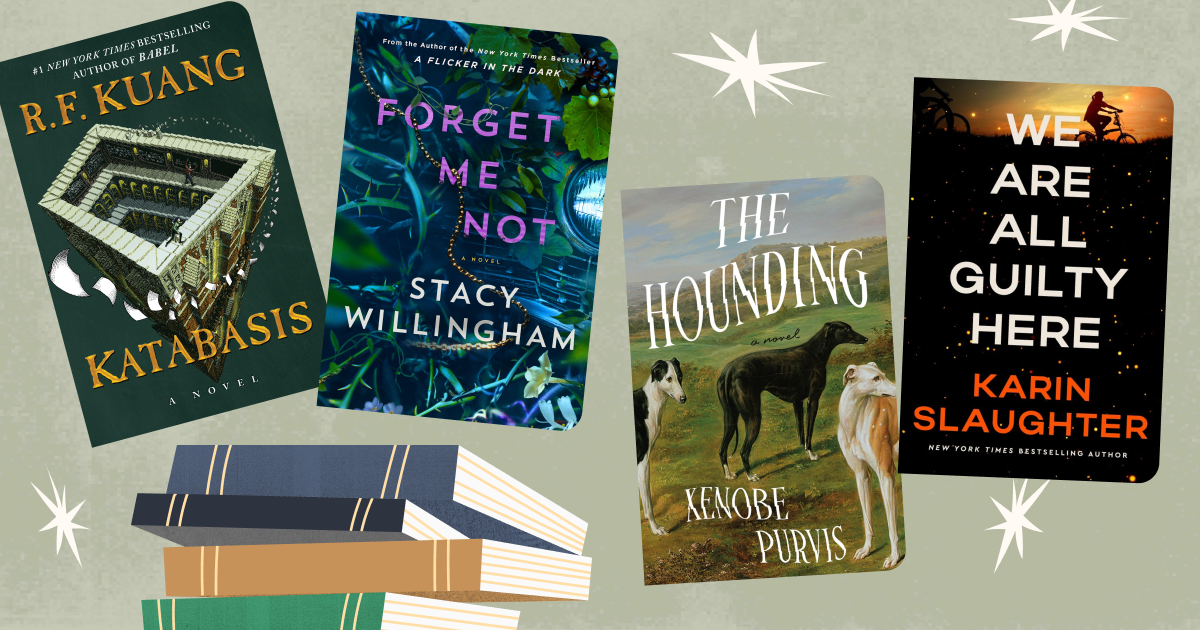
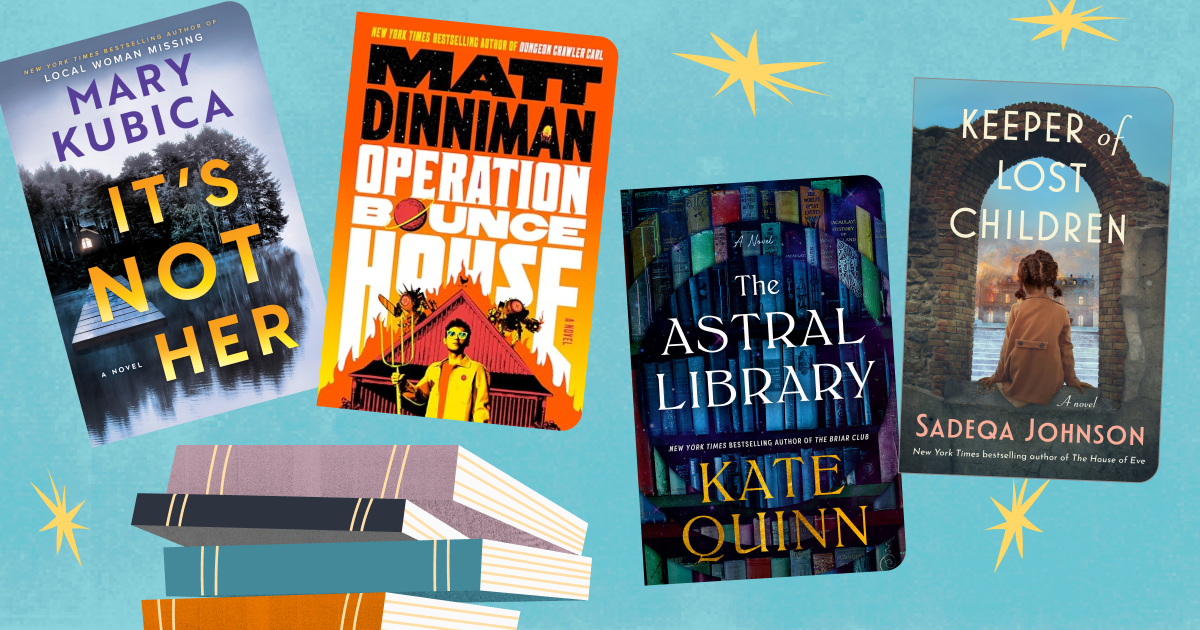
September 2026: Readers’ Most Anticipated Books
The Book Guide® is a participant in the Amazon Services LLC Associates Program, an affiliate advertising program designed to provide a means for sites to earn advertising fees by advertising and linking to Amazon.com. As an Amazon Associate I earn from qualifying purchases.
September has arrived, bringing crisp mornings, golden light, and the perfect excuse to refresh your reading list with this month’s most captivating new releases. As early autumn settles across the United States, there’s no better way to welcome September than by diving into stories brimming with adventure, heart, wit, and unforgettable moments. Whether you’re sipping a warm latte by the window, wrapping up in a cozy blanket as the evenings grow cooler, or stealing quiet moments between back-to-school routines and fresh starts, these September book picks will keep you turning pages all month long.

The Book Guide’s must-read recommendations for September 2026:
The Book Guide’s editorial team curates a monthly list of popular new releases, drawing from top ratings across the board. Each preview spans a wide range of genres—from contemporary and historical fiction to mysteries, thrillers, sci-fi, fantasy, romance, horror, young adult, and nonfiction. This month, three standout titles are not to be missed.

September’s new releases bring together an irresistible blend of lush fantasy romance, fiery dragon-bonded adventure, and mind-bending speculative fiction, making them perfect companions for the season’s early-autumn evenings. These are our top recommendations for the month: First, The Knave and the Moon by Rachel Gillig delivers a richly atmospheric fairy-tale romance filled with witty banter, slow-burn tension, and a brooding, morally complex hero. Gillig’s lyrical prose and playful yet poignant storytelling weave a world where curses, destiny, and desire collide, drawing readers into a gorgeously imagined realm that lingers long after the last page.
Next, Burn of the Everflame by Penn Cole offers an epic, high-stakes fantasy adventure centered on a fierce heroine bound to a legendary dragon and the fiery power of the Everflame. Cole balances heart-pounding action with deep emotional stakes, crafting a world of rebellion, magic, and forbidden bonds that will captivate fans of dragon riders and romantasy alike. This immersive, propulsive novel is ideal for readers who crave bold, character-driven stories where love and loyalty are tested against the backdrop of war.
Finally, Exit Party by Emily St. John Mandel tightens the screws with a haunting, genre-defying speculative thriller that probes reality, perception, and the fragile boundaries between worlds. Mandel’s elegant, unsettling prose and intricately layered plotting build toward a series of breathtaking twists, keeping readers off-balance as the story spirals into its enigmatic conclusion. Perfect for fans of literary sci-fi and psychologically intricate narratives, this mesmerizing read will haunt your September nights long after you finish.
September 2026: Best Book Releases.
September standout titles bring a luminous mix of literary insight, bold contemporary drama, and pulse-quickening suspense—ideal for lingering in the lingering twilight or diving into stories that match the season’s vibrant pace. Add these unforgettable reads to your list for a month charged with emotion, wit, and edge-of-your-seat discovery.
The Knave and the Moon by Rachel Gillig
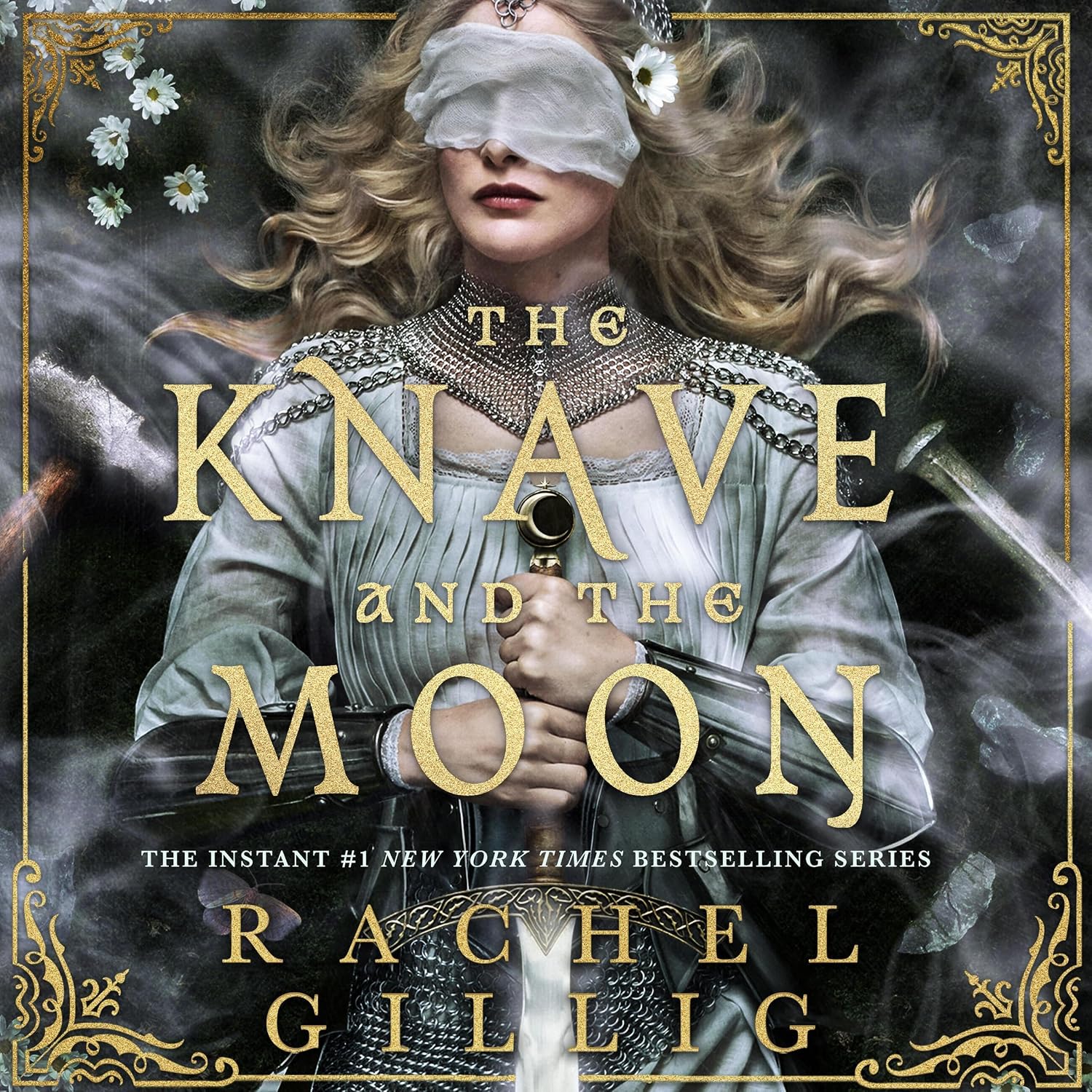
(Free with Audible Trial)
In this sweeping second installment of Rachel Gillig’s Stonewater Kingdom series—following last year’s stylishly moody The Knight and the Moth—the author deepens her signature fusion of gothic gloom and meticulous character study. The Knave and the Moon opens with high-stakes peril: Sybil, the series’ resolute heroine, finds herself coerced into a grim union with the kingdom’s tyrannical monarch, while her valiant champion, Rodrick Myndacious, has vanished into the shadows, feared dead. Yet the narrative shifts with the theatrical arrival of an enigmatic knave scaling the tournament ranks—a shadowy contender whose erased memory promises both peril and rekindled hope.
Burn of the Everflame by Penn Cole

(Free with Audible Trial)
In the fourth installment of her popular romantasy saga, Penn Cole returns to the intricate, high-stakes realm of Everflame, a universe where mortals, deities, and their demigod descendants are locked in a relentless contest for survival. Though specific narrative details remain closely guarded, Cole’s latest effort firmly cements her series within the contemporary fantasy canon, seamlessly weaving world-ending stakes with sharp, sparring dialogue and a meticulously calibrated slow-burn romance. Readers who savor the lush mythologies of Carissa Broadbent’s Crowns of Nyaxia, the swooning tension of Jennifer L. Armentrout’s Blood and Ash, or Sarah J. Maas’s now-canonical tapestries of thorns and roses will find themselves right at home in Cole’s sweeping universe.
Exit Party by Emily St. John Mandel

(Free with Audible Trial)
Known for her signature weave of labyrinthine sci-fi and exquisite character studies, Emily St. John Mandel (Station Eleven) turns her attention to the terrifying event horizon of our contemporary descent. In her latest novel, Exit Party, Mandel deftly splices anxieties of surveillance-state paranoia with the grim specters of impending civil strife, moving fluidly between a domed 2031 Paris, an ethereal lunar colony, and the destabilizing folds of space-time. It is a work that honors the genre’s finest tradition: setting its sights on the distant horizon only to map, with harrowing precision, the contours of our immediate present.
American Hagwon by Min Jin Lee

(Free with Audible Trial)
In this expansive multigenerational drama, National Book Award finalist Min Jin Lee (Pachinko) turns her keen sociological gaze to the exiled, tracking John and Helen Koh as they are abruptly unspooled from their comfortable middle-class life in Korea and flung into the alien topography of Sydney, Australia, before ultimately landing in Southern California. Equal parts sweeping social inquiry and tender domestic portraits, Lee’s panoramic novel weaves an intricate tapestry around the couple, their far-flung relatives, and the lingering orbit of their acquaintances. Early notices have justly praised her singular ability to marry staggering thematic ambition with the quiet, delicate nuances of family life.
The Pirate Queen by Ariel Lawhon

(Free with Audible Trial)
Ariel Lawhon, whose previous historical fiction The Frozen River won over readers with its sharp atmospheric detail, turns her gaze to sixteenth-century Ireland for a rousing portrait of maritime defiance. The novel charts the exploits of Grace O’Malley, the Gaelic noblewoman who abandoned highborn expectations to command her own fleet as a pirate queen. Following the collapse of a harrowing arranged marriage, O’Malley returns to her ancestral stronghold, channeling her passion for the open water into a fierce campaign against Elizabethan encroachments. In Lawhon’s capable hands, this legendary figure emerges not merely as an outlaw, but as an indispensable shield against an empire at its most ruthless.
Hollow Bones by Jodi Picoult

(Free with Audible Trial)
With her signature appetite for modern moral quandaries, veteran novelist Jodi Picoult (My Sister’s Keeper) turns her lens toward the fragile architecture of human security. Her latest narrative introduces Molly Fitzgerald, an administrator running Rhode Island’s Department for Emergency Preparedness whose career choices carry a bitter, poignant irony: her own mother perished in the September 11 terrorist attacks. Picoult excels at animating these existential ambiguities, interrogating how one builds a life under the constant threat of sudden catastrophe. She forces readers to confront uncomfortable imperatives—how, and indeed whether, we can ever truly safeguard those we love against an unpredictable world.
Taipei Story by R.F. Kuang

(Free with Audible Trial)
With characteristic restless energy, R.F. Kuang (Yellowface, Babel) extends her nimble genre-hopping trajectory into the coming-of-age novel, detailing a Chinese American undergraduate’s summer pilgrimage to Taipei. Lily Chen’s yearning for ancestral kinship and familial grounding runs headlong into the messy, uncooperative friction of reality. Beset by a dreadful roommate and met with cool indifference by local relatives, she observes the slow unraveling of her mythic homecoming with sharp, ironic detachment. Kuang delivers a narrative powered equally by acerbic wit and genuine emotional resonance.
The Thoroughbreds by Elin Hilderbrand
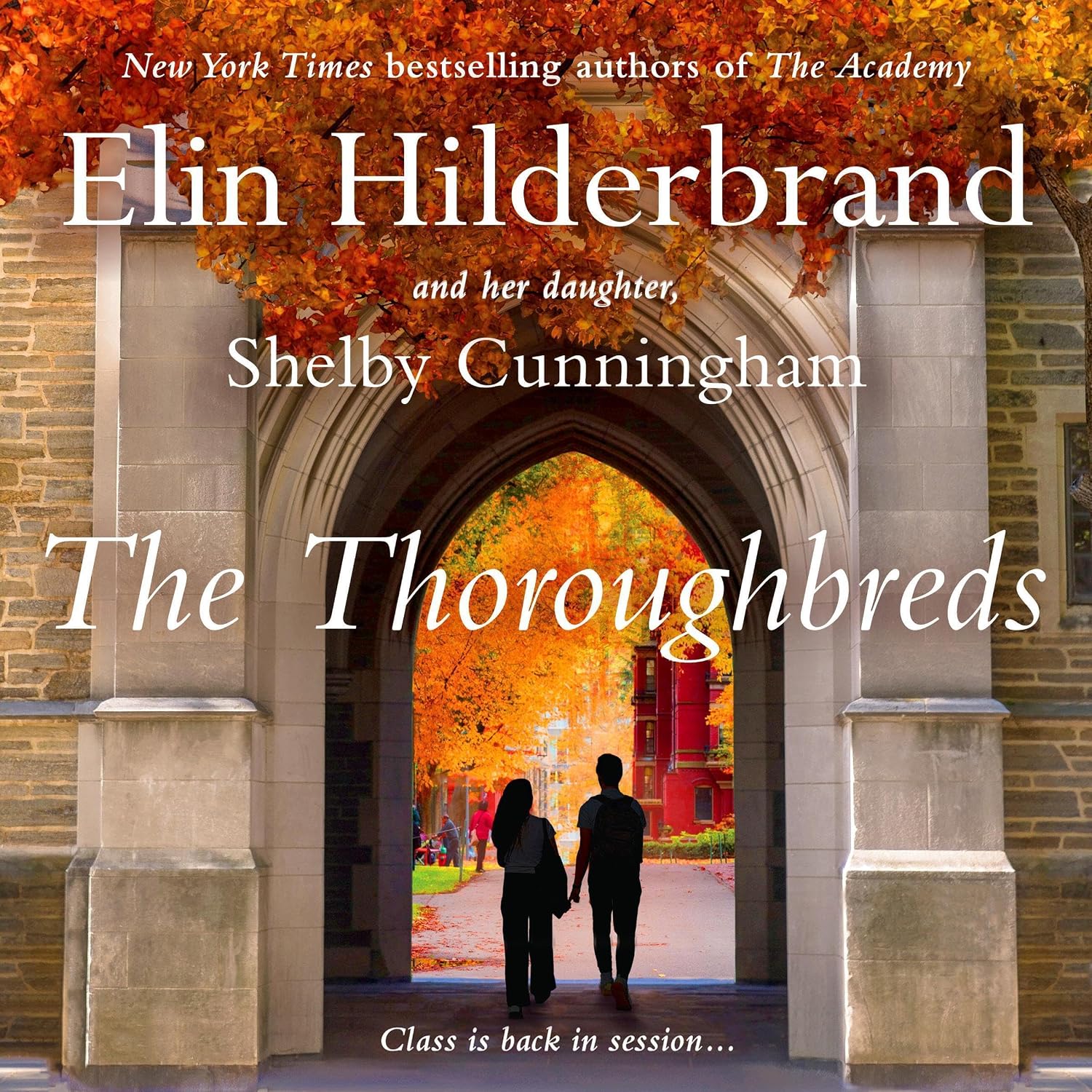
(Free with Audible Trial)
In the wake of The Academy—last year’s Goodreads Choice nominee—Elin Hilderbrand and her daughter, Shelby Cunningham, return to Tiffin Academy with The Thoroughbreds, a spirited continuation of their New England boarding-school saga. This second installment tracks the unruly crescendo of senior year, where hyper-privileged adolescents navigate subterranean speakeasies, reckless romances, and a relentless cadence of campus scandal. The co-authors capture that familiar, chaotic alchemy of youth—a world where social survival demands everything, and adolescence remains a splendidly messy affair.
Under Story by Chloe Benjamin

(Free with Audible Trial)
In Chloe Benjamin’s spellbinding new novel, the apocalypse arrives not with a bang, but with a baffling Antarctic enigma known as the Arc. Dispatched to the edge of the world as human negligence accelerates planetary collapse, biologist Laurel Salter dare to see this uncanny manifestation not as a death knell, but as an extraordinary lifeline. Building on the haunting thematic depth of her 2018 bestseller, The Immortalists, Benjamin crafts a sweeping, cerebral narrative that deftly weaves together ecological dread, familial devotion, and the shifting boundaries of human consciousness. For admirers of Richard Powers’ The Overstory, this luminously imagined work offers a profound, vital addition to the canon of contemporary eco-fiction.
The True Confessions of First Lady Freeman by Deesha Philyaw

(Free with Audible Trial)
Anticipation surrounding Deesha Philyaw’s long-awaited debut novel arrives bolstered by early critical acclaim. Following her PEN/Faulkner Award–winning 2020 collection, The Secret Lives of Church Ladies, True Confessions introduces Scharisse Freeman, a megachurch pastor’s wife whose impeccably curated world unravels under the weight of a sudden, brutal, and utterly hilarious scandal. Balancing biting satire with genuine dramatic weight, Philyaw’s buzzy long-form entry offers a delightfully entertaining dismantling of performative perfection, firmly establishing her as a vital voice in contemporary fiction.
Ply by Hernan Diaz

(Free with Audible Trial)
With Trust, his Pulitzer Prize–winning dissection of the sinews of American capital, Hernan Diaz established himself as a master anatomist of our national myths; now, he pivots from the ledger books of the Gilded Age to the uncharted frontier of a post-state future. Set centuries ahead in a world where sovereign nations have dissolved into tenuous new forms, his speculative novel Ply follows an orphaned city girl navigating the shadows, dealing illegally in harvested electricity to survive. Part high-strung tech thriller, part philosophical enquiry and picaresque journey, the book operates as a haunting artifact of our own modern anxieties—a work that blends genre machinery with deep metaphysical drift to interrogate the terrifyingly open question of what comes next.
Hollywood, Ending by John Green

(Free with Audible Trial)
In Hollywood, Ending, John Green—the perpetually kinetic author who seamlessly pivoted from the teenage melodrama of The Fault in Our Stars to a sobering history of tuberculosis—presents an ambition of a distinctly different vintage. Unfolding through dual perspectives, this starry-eyed romance burrows into the glittering, hyper-commoditised machinery of the modern film industry, tracing the unspooling fortunes of rookie actors Kai and Juniper as an unexpected box-office hit thrusts them into the harsh glow of the press junket circuit. The novel’s internal cinematic pivot—a film centered on Andy Warhol—serves as an explicit nod to the artist’s midcentury theories on fleeting fame, transforming what could have been a conventional Hollywood satire into a surprisingly poignant critique of contemporary celebrity, public performativity, and the relentless, exhausting appetite of our modern attention economy.
The French Illusion by John Grisham

(Free with Audible Trial)
The undisputed heavyweight champion of the legal thriller, John Grisham switched gears last year with his first traditional whodunit mystery. His new book turns to international espionage in the story of a Paris kidnapping, a risky CIA operation, and an all-time bummer of a honeymoon. Inspiration for the book came from elder statesmen like Len Deighton, John le Carré, and Robert Ludlum. In fact, you can check the Goodreads book page for a note from the author about his ultimate intent with the story.
Murder at the Grand Alpine Hotel by Lucy Foley

(Free with Audible Trial)
In the lineage of golden-age classicists, Agatha Christie remains the undisputed benchmark, making any return to her world both a risky endeavor and an irresistible proposition. Enter Murder at the Grand Alpine Hotel, an officially sanctioned Miss Marple mystery crafted with practiced finesse by U.K. bestseller Lucy Foley. Transporting the sharp-eyed spinster from St. Mary Mead to a gleaming resort perched high in the Swiss Alps, Foley subjects her famous amateur sleuth to a predictably tangled web of high-altitude homicide. Early word among whodunit aficionados suggests the homage strikes a triumphant balance, pairing cozy nostalgias with a brisk, modern polish that honors Dame Agatha’s enduring blueprint.
The Witches of Cambridge by Alice Hoffman

(Free with Audible Trial)
In the damp, cerebral autumn of circa-1950 Cambridge, Massachusetts, two incoming Radcliffe freshmen find themselves tossed together by fate and institutional sorting: Ava, a fiercely brilliant daughter of the agrarian working class, and Lauren, the effortlessly poised heiress to a dynasty of local privilege. Their precarious social alchemy takes a dark, intoxicating turn upon their induction into the Lilith Society, an elite campus cabal whose gilded lineage stretches quietly back to the colonial era—though “sisterhood,” as it happens, is merely the period-appropriate euphemism for a coven, and “women” the polite cover for witches. With the sinister paranoia of McCarthyism humming quietly in the background, Alice Hoffman delivers a spellbinding, atmospheric examination of mid-century American conformity and the country’s relentless, cyclical appetite for witch hunts.
Dead Beat by Leigh Bardugo

(Free with Audible Trial)
Leigh Bardugo’s dark academia saga has long traded in a version of Yale University steeped in occult governance, institutional rot, and supernatural dread. In Dead Beat, the series’ climactic entry, the author unleashes full-scale apocalyptic mayhem upon the Elm City, forcing antiheroine Alex Stern into a desperate, last-ditch stand as literal hellfire spills into the streets of New Haven. Bardugo orchestrates this final reckoning with characteristic swagger, marshaling familiar allies and long-simmering grudges toward a bloody, heroic crescendo that provides her devoted readership with a satisfyingly grim resolution.
Tempest by Victoria Aveyard

(Free with Audible Trial)
In Victoria Aveyard’s newest swashbuckling endeavor, Cat Rose—the aristocrat-turned-outlaw formerly known as Lady Catrine—has reinvented herself as the Widow Rose, a pirate tavern queen waging a fierce campaign against the tyrannical Meridian Empire. As the Empire’s merciless naval fleet descends upon the fragile pirate republic, portending a dark return to colonial subjection, systemic oppression, and lamentably misguided tailoring, Cat is forced into an uneasy alliance with the one man she would prefer to avoid at all costs: the legendary captain Valerian Kane. The result is a high-seas spectacle crafted with the signature narrative momentum readers have come to expect from the bestselling author of the Red Queen series.
Grim Tidings by B.K. Borison

(Free with Audible Trial)
Darcy Moore has grown weary of her post as a Grim Reaper, a wearying appointment that reduces her to the designated villain in nearly every story she inhabits. Yet her attempt to resign founders against the rigid bureaucracy of the Department of Hauntings & Spirits, a celestial governing body notoriously intolerant of insubordination. Salvation—or at least a very attractive complication—arrives in the person of Gabriel Aetos, a strikingly handsome Guardian Angel who offers a welcome reprieve from the gloom. Moving away from her familiar cozy backdrops, romance author B.K. Borison brings her signature warmth to the metaphysical, orchestrating a lively, otherworldly courtship that proves love can flourish even under the shadow of the ultimate deadline.
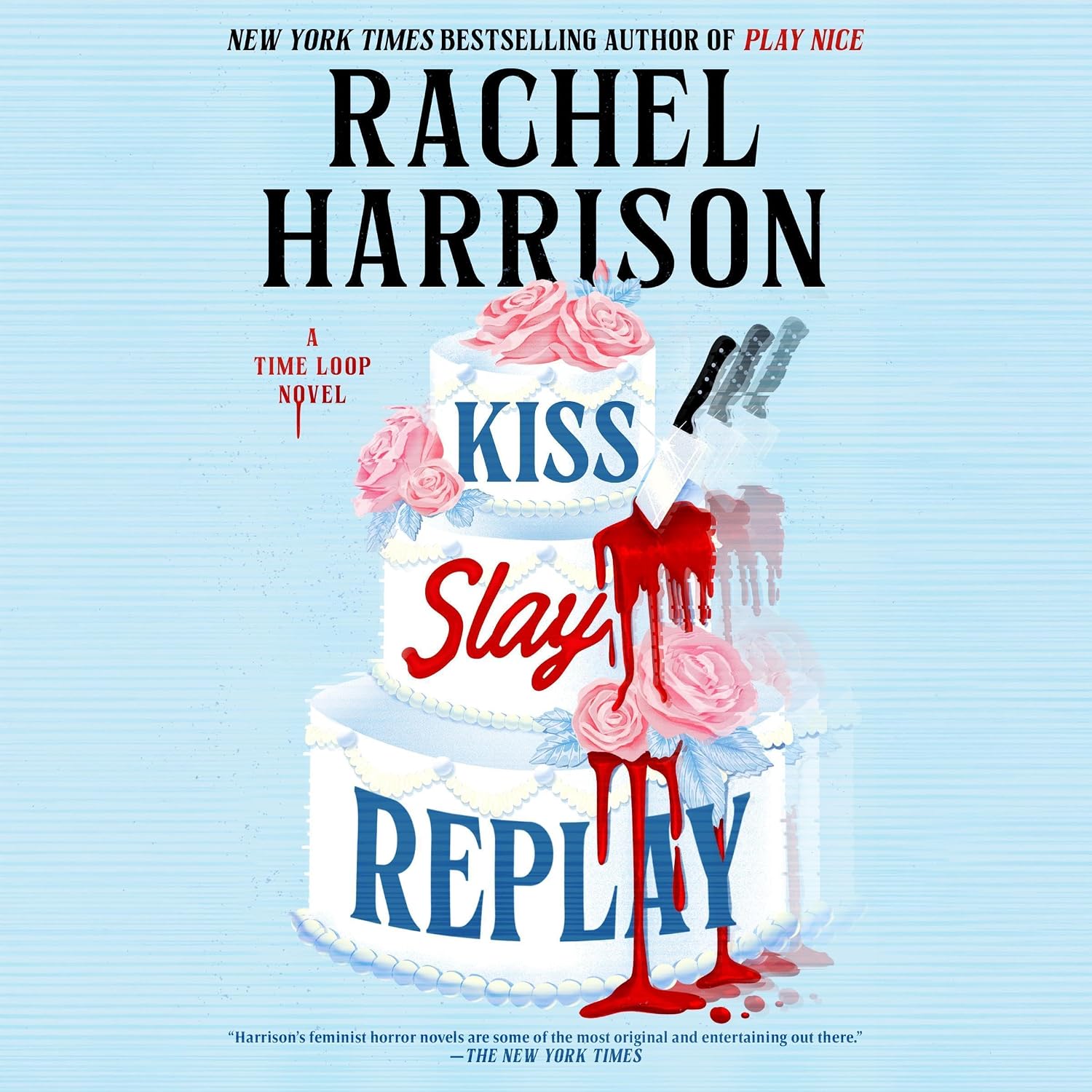
Kiss Slay Replay by Rachel Harrison
(Free with Audible Trial)
Hovering delightfully along the precarious fault line between modern rom-com and full-throttle body horror, Rachel Harrison’s latest tale (Play Nice) gleefully dismantles the conventions of both. The premise finds weary wedding guest Willa Sullivan trapped inside a nightmarish temporal loop: a masked assailant brutally massacres the reception party, only for the gruesome scene to reset and repeat ad infinitum. Anyone who has ever suffered through a seemingly endless nuptial celebration will recognize the existential dread, albeit served here with far more carnage. Harrison continues to refine her signature brand of sharp, irreverent terror, offering a wicked pleasure that will inevitably send uninitiated readers scrambling through her back catalog.
Scion by James Islington

(Free with Audible Trial)
With Apple TV’s upcoming adaptation of Neuromancer signaling a full-throated revival of cyberpunk aesthetics, the timing could not be more fortuitous for James Islington’s latest literary foray. The Australian author—who built a formidable, zealous readership with his fantasy blockbuster The Will of the Many—now pivots to a buzzy sci-fi thriller anchored in a grimly familiar premise: a world where the wealthy elite have successfully commercialized immortality, leaving the underclass to pick up the tab. At the center of this neon-drenched dystopia is Azure, a genetically enhanced assassin who, accompanied by an ubiquitous AI companion, reluctantly accepts a deeply suspicious assignment safeguarding the very upper crust he is built to destroy.